One of the most frustrating parts of getting into manga is that most recommendation systems are organized by genre — shonen, seinen, slice of life, fantasy — without explaining what those genres actually feel like to read.
If you are new to manga, you probably do not know which genres map to your taste yet. But you do know how you want to feel when you sit down with something.
This guide starts there.
”I want something that feels warm and easy”
You want to read without pressure. Something that does not demand much from you, but still feels worth your time.
Try: Yotsuba&! by Kiyohiko Azuma
 Amazon →
A series about a curious young girl navigating ordinary days. Each chapter is self-contained. There is no plot to track, no tension to resolve. It is simply well-observed, funny in a quiet way, and surprisingly moving if you let it be.
This is the manga equivalent of sitting somewhere pleasant with no particular agenda.
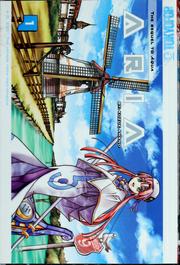
Also worth trying: Aria by Kozue Amano
 Amazon →
Set on a future version of Venice on Mars, where gondoliers-in-training spend their days getting to know the city and one another. Unhurried, beautiful, and genuinely peaceful to read.
”I want something that pulls me forward”
You want momentum. A story with stakes, forward motion, and the feeling that something is building.
Try: Dungeon Meshi (Delicious in Dungeon) by Ryoko Kui
 Amazon →
A fantasy adventure that doubles as a cooking manga. The hook is unusual, but the series delivers sustained narrative momentum across its full run. Each chapter moves the story forward while expanding the world.
It is also complete, which means there is a real ending waiting for you.
Also worth trying: Vinland Saga by Makoto Yukimura
 Amazon →
A historical epic set in Viking-era Europe, beginning as a revenge story. It starts fast and intense, then shifts into something more philosophically interesting in its second arc. If you want a long series that earns its length, this is one of the strongest candidates.
”I want something that makes me think”
You want ideas, ambiguity, or a story that leaves you sitting with something after you finish.
 Amazon →
A psychological thriller about a Japanese surgeon who saves the life of a child who becomes a killer. The series follows him across Europe as he tries to undo what he believes he caused. It is densely plotted, morally complex, and structured more like a literary novel than most manga.
It is also one of the most accessible entry points into serious manga for readers who come from prose fiction.
Also worth trying: Goodnight Punpun by Inio Asano
 Amazon →
A coming-of-age story told with unusual visual abstraction — the protagonist is rendered as a simple bird figure while the world around him is drawn in realistic detail. It is not a comfortable read, but it is one of the most formally inventive manga in print.
”I want something that moves me”
You want emotional depth. A story that earns its feeling without manipulation.
Try: A Silent Voice by Yoshitoki Oima
 Amazon →
A complete seven-volume story about bullying, guilt, and the slow possibility of repair. It handles difficult material carefully and does not resolve too neatly. The ending earns what it asks of you.
Also worth trying: Solanin by Inio Asano
 Amazon →
Two volumes about being young and uncertain, set against the backdrop of a band trying to figure out if they are serious about music. Small in scope, precise in feeling.
”I want something visually stunning”
You want to slow down and look. Art that makes you read differently.
Try: Vagabond by Takehiko Inoue
A fictionalized life of Miyamoto Musashi. The brushwork is extraordinary — some pages read more like ink painting than sequential art. If you want to understand what manga can do visually at its highest level, this is the answer.
Also worth trying: The Summit of the Gods by Jiro Taniguchi
A mountaineering story drawn with architectural precision. Every surface — snow, rock, rope, weathered skin — is rendered with care. Reading slowly is part of the experience.
How to use this guide
Pick the mood that fits where you are right now, not where you think you should be. The best first manga is the one you will actually finish.
Once you finish one, you will have better information about your own taste than any genre label could give you.
A good place to start:
See on Amazon →Affiliate link — we may earn a small commission at no cost to you.