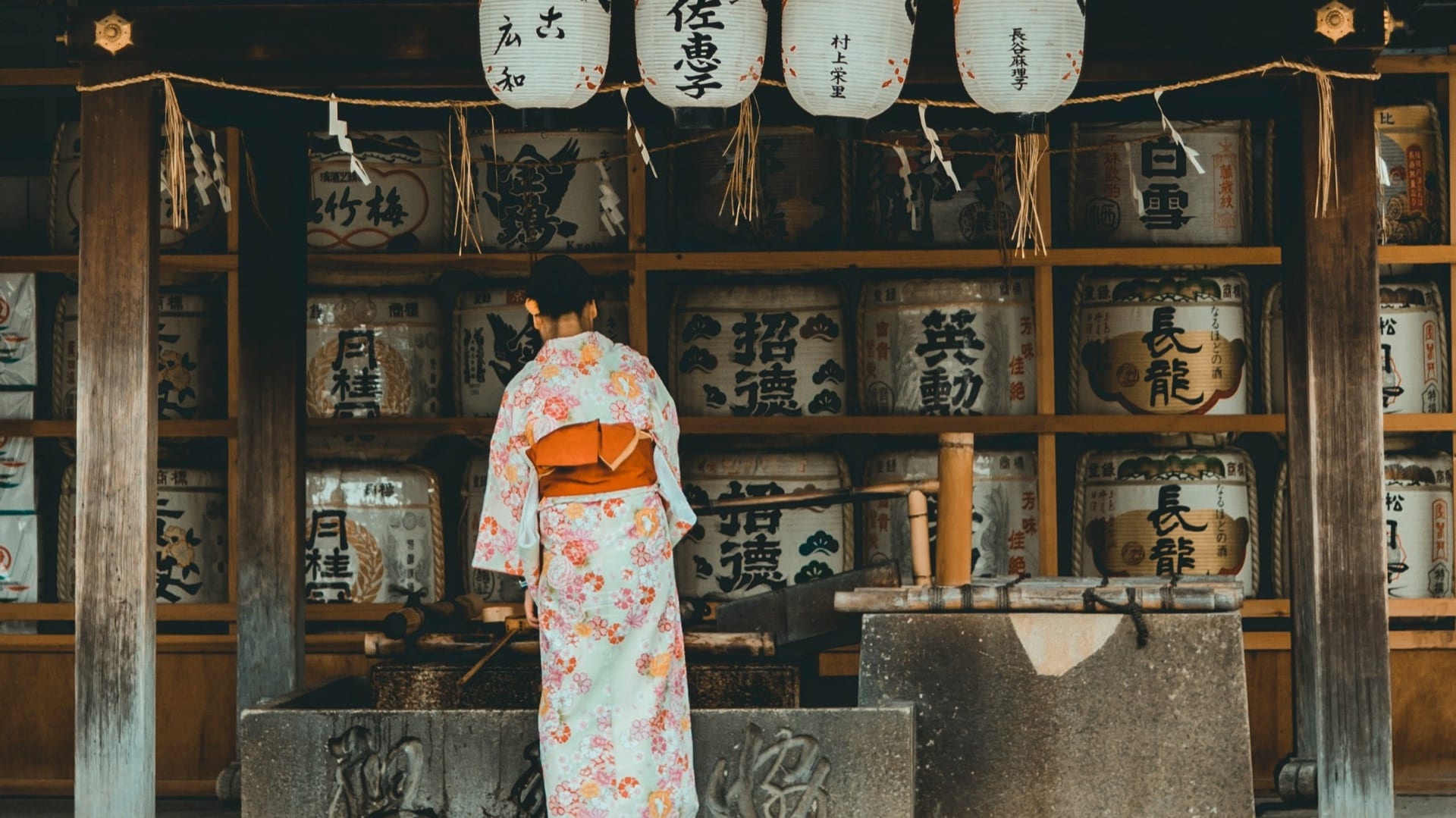
Walk up to almost any shrine in Japan and you will find things left there. Coins in a wooden box. Bottles of sake on a shelf. Rice, salt, water, seasonal fruit arranged on a tray. Strips of white paper hanging from rope. Wooden plaques covered in handwritten wishes.
None of this is random. Each item has a logic — and understanding that logic changes what you see when you visit.
The coin and the offering box
The most visible offering at any shrine is the coin tossed into the saisen-bako — the wooden offering box at the front of the worship hall.
The coin is not a fee. It is not a payment for prayers granted. It is the opening gesture of an exchange — a small act of giving that marks the beginning of an approach to the kami. You are not buying anything. You are initiating contact.
The most commonly tossed coins are five-yen pieces (go-en), partly because go-en (五円) sounds identical to go-en (御縁), meaning connection or good relationship. The coin choice itself is a small piece of wordplay embedded in practice.
Food offerings: the logic of sharing a meal
In many religious traditions, offering food to the divine is a way of sharing a meal — acknowledging the kami as a presence worthy of the same care you would give a guest or an ancestor.
At Shinto shrines, food offerings (shinsen) typically include rice, salt, water, and sake. These are not random selections. They represent the staples of Japanese agricultural life, the things that sustain human existence. Offering them says, in effect: what sustains us, we share with you.
Sake holds a particular place in Shinto ritual. The large white barrels (kazaridaru) stacked near shrine entrances are usually donated by sake breweries. The connection between alcohol, purification, and celebration is old and embedded in the tradition.
Seasonal offerings — fruit, vegetables, fish — reflect the cycle of agricultural life that Shinto was originally organized around. Many shrines still perform formal offering ceremonies at specific times of year, continuing this rhythm.
Ema: the written wish
Ema are small wooden plaques that visitors write wishes or prayers on before hanging them at the shrine. The word combines e (picture) and ma (horse) — in earlier tradition, horses were the most valuable offering one could make to a kami, and wooden picture horses became a substitute over time.
Today, ema carry anything: requests for exam success, health, safe travel, business prosperity, relationships, safe pregnancy. Reading the ema at a shrine gives an unusually honest picture of what people in that community are worried about and hoping for.
The act of writing and hanging an ema is not simply wishful thinking. It is a formal statement — made in a particular place, at a particular moment — that makes the wish concrete and witnessed.
Omamori: taking the shrine with you
Omamori are protective amulets sold at shrines and temples. Inside the fabric pouch is a small piece of paper or wood inscribed with prayers. Different types carry different purposes: traffic safety, academic success, health, relationships.
They are not souvenirs. They are a way of extending the shrine’s protective presence beyond the shrine grounds — carrying something of the kami’s care into daily life.
Most omamori should be returned to the shrine, or another shrine, after a year — brought back so the kami can renew the protection, or simply so the old one is properly retired rather than discarded.
What the gesture is actually doing
Shinto is not primarily a tradition of personal spiritual transformation in the way that some religious traditions are. It is a tradition of relationship — between humans and kami, between communities and the forces that sustain them.
Offerings are how that relationship is maintained: gestures of acknowledgment that the kami is present, that it has provided or protected, that it is worth approaching with care.
That logic does not require being Japanese or Shinto to understand. The underlying idea — that some presences are worth acknowledging with more than mere presence, that a small act of giving opens a conversation — is recognizable across many traditions.
The things left at shrines are evidence of people doing exactly that, over and over, across centuries.