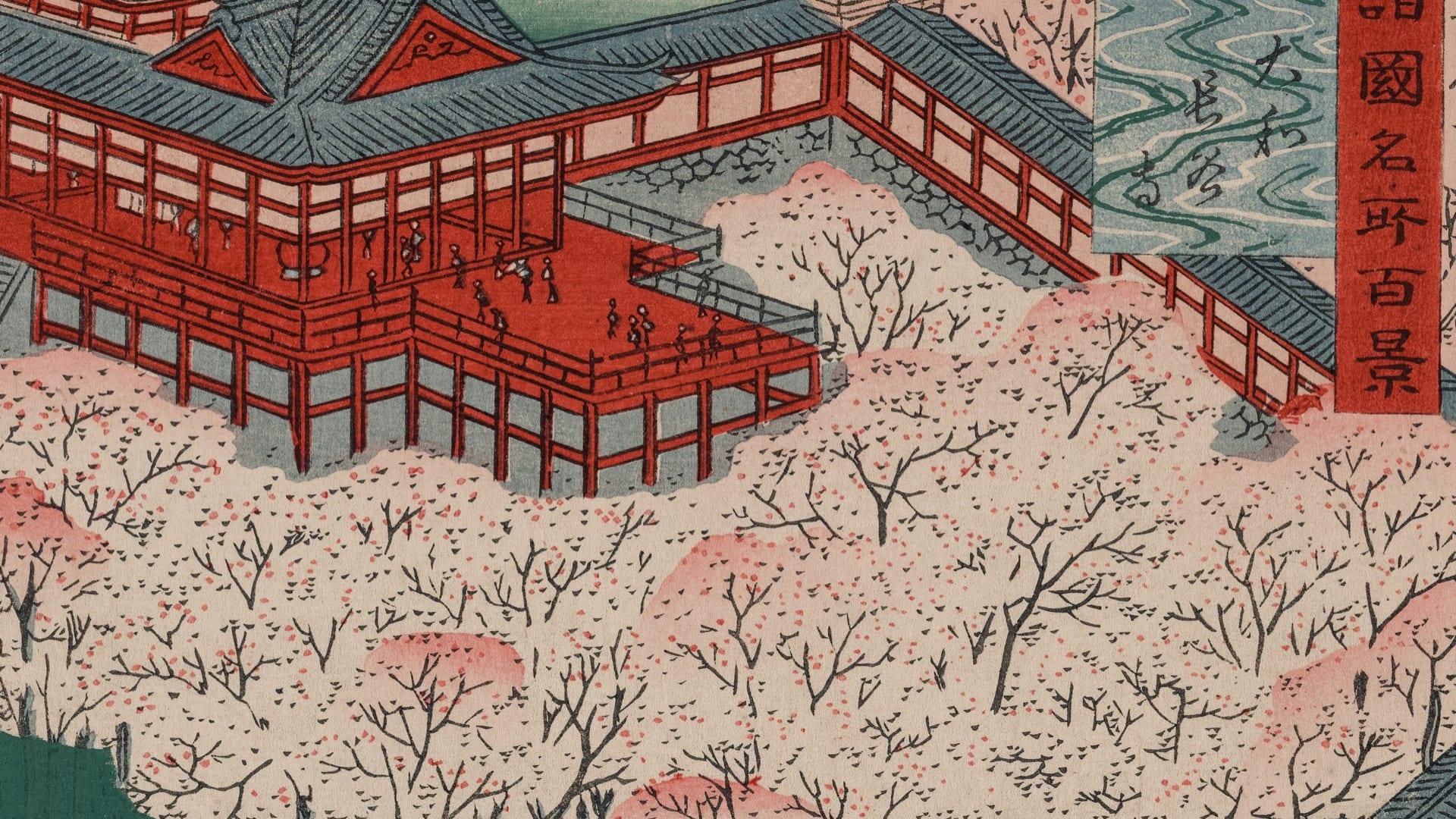
There is a kind of map hidden inside Japanese place names — one that shows not what a place is now, but what it used to be.
The kanji in an address often describe the original landscape: yama (山) for mountain, kawa (川) for river, mori (森) for forest, shiro (城) for castle, ike (池) for pond. Many languages encode geography this way. What makes Japan interesting is how much further the names go — into history, folk belief, and the memory of things that disappeared centuries ago.
Names that survive their referents
Some of the most interesting place names in Japan describe things that have been gone for centuries.
Kajichō (鍛冶町) means blacksmith district — a name that persisted in Tokyo neighborhoods long after the blacksmiths moved away. Bakurōchō (馬喰町) means horse dealer’s town, preserving the memory of a livestock market that closed generations ago. Sakamachi (坂町) means slope town, often marking what was once a path up a significant incline, even when the slope has been graded flat.
In Kyoto especially, the grid of streets still carries the names of the imperial residences, temples, markets, and crafts that organized the city a thousand years ago. Walking the streets of central Kyoto with attention to the names is a way of reading a compressed history of what the city was.
Names that encode fear and warning
Some place names preserve memory of a more uncomfortable kind: disasters, battles, executions, places where something went badly wrong.
Kubikiri-zaka (首切り坂) — execution slope — marks places where public executions were once carried out. These names were not sanitized out of the landscape. They were maintained, partly as warning, partly as acknowledgment that what happened there happened.
Jigokudani (地獄谷) — hell valley — marks geothermal areas where the ground steams and the water boils: accurate description combined with the folk understanding that places of extreme natural force were connected to the divine or the terrifying.
Hitotsubashi (一橋) — single bridge — often marks places where a single crossing was the only way across a barrier, preserving the strategic memory of a bottleneck that mattered in an era of military movement.
Names that mark sacred boundaries
Many Japanese place names preserve the location of shrine and temple complexes that have since been reduced, relocated, or demolished.
Miya (宮) and jingu (神宮) in place names indicate that a shrine once stood there or still does. Tera (寺) and ji (寺) indicate a temple. Tori-i (鳥居) in a neighborhood name marks where a torii gate once stood at the entrance to a sacred precinct, even if the precinct itself is long gone.
In Tokyo, where rapid development repeatedly rebuilt the city over centuries, these name-traces are sometimes the only visible evidence of what once organized the space. A neighborhood called Shimbashi (新橋 — new bridge) preserves the memory of the infrastructure that shaped its early development. A street called Torii-zaka (鳥居坂 — torii slope) marks where the approach to a shrine once ran.
Names that encode natural memory
Rivers change course. Wetlands are drained. Forests are cleared. The kanji in place names often preserve what the landscape was before these changes.
A neighborhood with ike (池 — pond) in its name often sat near a pond that no longer exists. A district with numa (沼 — marsh) was once built on or near a wetland. A street with hama (浜 — beach or shore) often ran along a coastline that has since been pushed back by land reclamation.
This makes place names an informal geological and ecological record — a way of knowing what the land was before human modification changed it. In the context of disaster preparedness, there is evidence that areas whose names encode flood, landslide, or wetland history have sometimes proven more vulnerable in disasters than their built-over appearance suggested.
How to use this when you travel
You do not need to be a specialist in Japanese to begin reading place names this way. A few kanji are enough to start: mountain (山), river (川), forest (森), castle (城), shrine (宮/神宮), temple (寺), bridge (橋), slope (坂/坂).
When you are walking through an unfamiliar Japanese neighborhood and the map shows a street name or district name that contains any of these characters, you are looking at a record of what was once there. The street may be flat — but the name says it used to slope. The city block may be entirely built over — but the name says there was once a sacred grove.
The landscape Japan built over in the twentieth century is largely recoverable, if you know to read the names of what replaced it.
That is a form of archaeology available to anyone who looks.