Watch: Shrine or temple? How to tell
The anxiety around visiting a Japanese shrine is usually bigger than the situation requires.
Most visitors worry about doing something wrong — clapping at the wrong time, bowing incorrectly, not knowing the right words, somehow offending. This worry is understandable but largely misplaced. Japanese shrines are not traps for the uninitiated. The basic form is simple, and what matters most is attention rather than precision.
Here is what actually matters.
The threshold
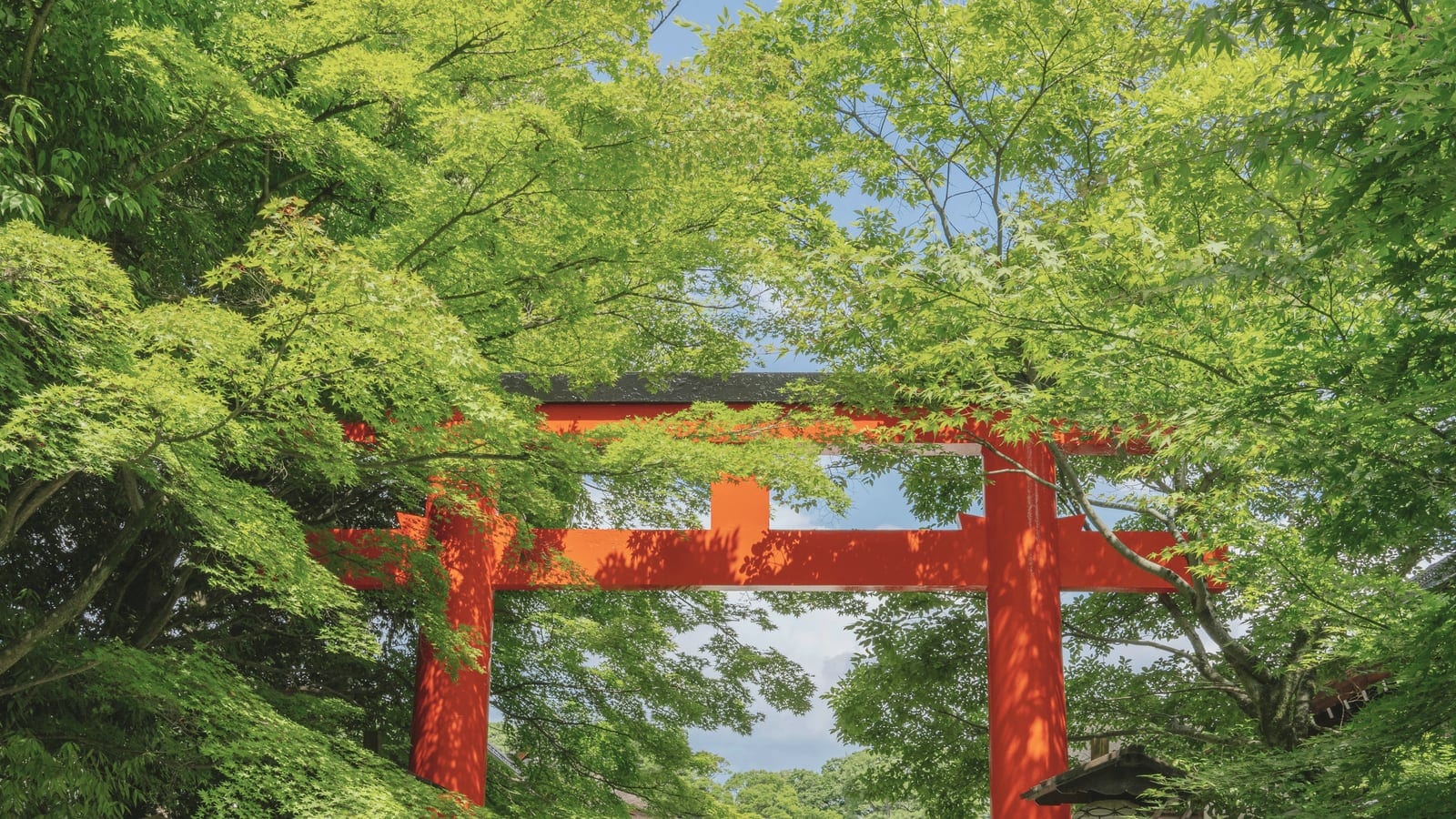
When you pass through a torii gate, you are entering sacred space. A slight bow before stepping through is appropriate — it does not need to be deep, and it does not need to be formal. It is just a physical acknowledgment that you are crossing a threshold and you know it.
This is the most important moment in the whole visit: noticing the transition, and letting yourself actually cross it.
The water basin
Most shrines have a temizuya — a stone basin with a ladle — near the entrance. The intended sequence is: ladle in right hand, rinse left hand; ladle in left hand, rinse right hand; cup water in left hand and rinse the mouth or simply pour over the left hand again; tilt the ladle upright so water runs down the handle to clean it; return the ladle.
If you are not sure of the sequence, rinsing both hands is enough. The point is preparation — marking the moment before you approach the main hall.
Some shrines have signs explaining the sequence. Many visitors do it imperfectly and no one objects.
The approach
Walk to one side of the central path (sandō) rather than the center. The center is traditionally left for the kami. This is easy to do once you know it, and the shrines where it is most observed will often have stone paths that make the division clear.
At the offering hall
The main worship hall (haiden) is where most visitors stop to pray or pay respects. The sequence:
- Approach the offering box
- Toss a coin — a five-yen coin is traditional but not required
- If there is a bell rope above the box, ring it gently once before bowing
- Two deep bows
- Two sharp claps — hands at chest height, clear sound
- A moment of attention, prayer, or simply presence
- One final bow
This takes less than a minute. You do not need to say specific words. Prayers at shrines are personal and informal.
If you do not want to participate in the worship form, standing quietly and observing is entirely acceptable. You do not have to clap or bow. You are a visitor in a place that welcomes visitors.
What you can skip worrying about
Knowing which kami is enshrined there. It is interesting to know, and you can often find out from a placard near the entrance. But you do not need to know before you visit.
Saying the right prayer. There is no required formula. People pray at shrines the way people anywhere ask for things — in their own words, for what matters to them.
Being non-Japanese or non-Shinto. Shrines are not exclusive to practitioners. Respect is what is asked for, not membership.
Your shoes. You keep them on at shrines. Only temples (Buddhist) sometimes have areas where shoes come off. At Shinto shrines, shoes stay on throughout.
Temples versus shrines
These are two different traditions. Shinto shrines (marked by torii gates) honor kami. Buddhist temples (often marked by large gates called sanmon and featuring incense burners) honor the Buddha and bodhisattvas.
Japan has both, sometimes next to each other, sometimes sharing the same grounds due to centuries of religious overlap. The worship forms differ slightly: at temples, you generally do not clap — you press your hands together (gassho) and bow.
If you are not sure whether you are at a shrine or a temple, look for a torii gate. If it has one, it is a shrine.
The simple version
Shrines are places where people have been coming for a very long time to acknowledge something larger than everyday life. The form asks you to slow down, wash your hands, approach deliberately, make a small offering, and be present for a moment.
That is essentially it. Everything else is detail.
Most of the etiquette around shrines is just the physical expression of that underlying intention: I am here. I am paying attention. I know what kind of place this is.
If you bring that intention, you have done the important part.